The experience of the challenge of innovating in the legal market
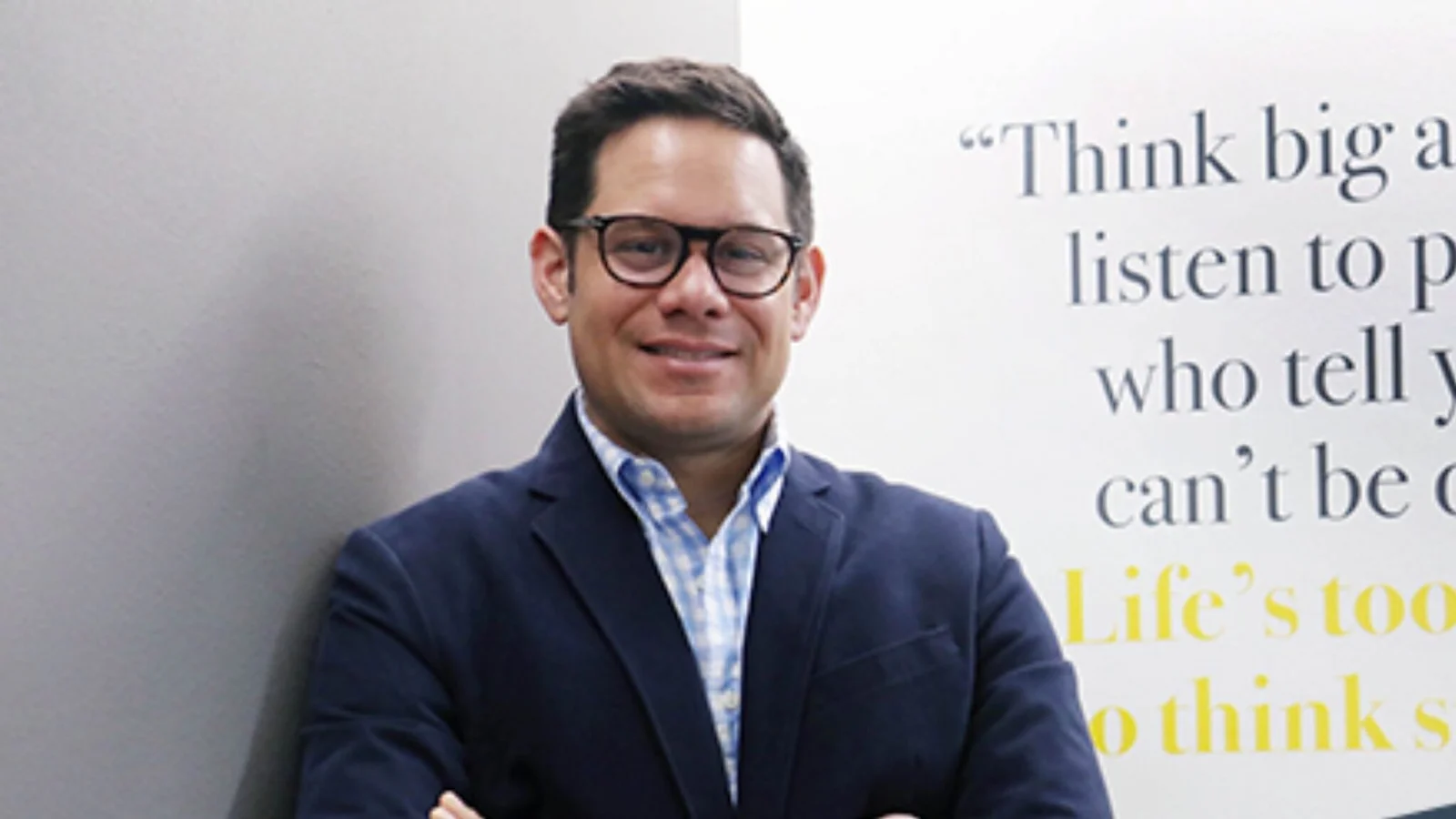
Innovating in the legal market by conservative essence has not been without difficulties and has required motivation, passion and inspiration. Andrés Jara, CEO of Alster Legal He reflects on his experience over these four years leading a legal service company, taking the flag and the purpose of transforming it.
"NASA delivered $69 million to SpaceX, a company of the serial entrepreneur Elon Musk, to carry out a program that would be able to divert meteors that could approach the land dangerously," the magazine Entrepeneur published on April 16.
Nothing closer to the Salvation series, where Chilean Santiago Cabrera as Darious Tanz, a great entrepreneur and visionary who has built a spacecraft to save humanity, is participating.
Both characters, one from the real world and the other from the fictional world, are able to inspire with their vision and demonstrate that with perseverance and passion, it is possible to drive changes in industries dominated for years by state programs and traditional, global companies, with great financial capacity, size and experience.
What is this about those subjects I usually write about? I'd say a lot.
As an entrepreneur in a traditional industry, dominated by traditional companies or legal studies that for years have led the legal services market and where business practices and models have not changed in years, I clearly identify with Musk and Tanz.
Moreover, I am inspired by your passion and push to seek the disruption of spaces that were commonly reserved for those who for years dominated these spheres.
Innovating and undertaking is not a game, it is a profession that requires hard work, personal and emotional costs, but that delivers a rewarding result and, that feels and lives, every day.
I certainly am not the one to give lessons on this issue, there are great entrepreneurs who have come a lot more than I have, but if I think I can contribute with some of the experience that has meant building a company in an adverse, conservative and reticent industry to change, such as the legal services industry.
Indeed, the experience of designing a different business model in the legal services industry, leveraged in technology and in an extremely competitive environment, I think it allows to transmit lessons. Here is a summary of the 8 factors that have been relevant to our journey.
1. Lifelong learning.
What we have learned during these years of development of ALSTER is a lot, the mistakes have been multiple and the challenges daily.
However, every minute spent on this trip has been worth it. There have been few barriers we have encountered since the start of our company, but there have been no few gratifications that we have had in the process.
We can say that continuous learning has been essential to sustain the growth and development of our company.
If it is already strange to talk about the legal services industry, it is even more strange to take the flag and to transform it.
2. Crafts versus engineers.
If it is already strange to talk about the legal services industry, it is even more strange to take the flag and to transform it.
Lawyers for centuries have felt closer to artisans than engineers, and certainly have always assimilated their work to works of art rather than to efficient production processes.
Talking about commodities in the legal market has always been misseen and even criticized by many who believe that their work cannot be labelled as such.
However, the same was said by financial analysts, doctors, teachers, accountants and many others who have seen how through technology, their traditional areas of practice have mutated to optimized spaces, with limited resources, with customers demanding efficiency and empirical demonstration that their results add value.
It is such professions that have also observed a radical change in the way they were executed and marketed. As customers incorporate digital skills and professionalize their administration and service model, they require their suppliers to align with such a strategy.
In that course, our experience is that the skills and methods of the engineer have better effects than those of the craftsman.
3. The voice of the client
It is precisely at the moment when we deepen the understanding of the needs that our customers or prospects manifest, when opportunities for business and service arise.
The understanding of the customer in a market such as the legal one is substantial for the success of any service model. The closeness and permanent feedback must be maximum in those relationships.
If we are able to build products or services based on the voice of the customer, it is very likely that they can connect it to your needs and bring it to a favourable purchase decision.
4. Communication as a fundamental element of the relationship.
On the other hand, in any customer-centred business model, it is essential that communication channels are active. It is we who must capture the information, but not only that, but also process it, understand it, induce it based on it and find appropriate solutions.
In this same sense, the construction of minimum-viable models, pivoting and the experience of doing, will ensure that products or services can better meet real needs.
5. Errors as a source of opportunity.
On our way we have learned from the mistakes and also defined that they constitute a fundamental basis for growth as a company. If we're wrong, it means we're trying, a big first step.
Then, if we are able to educate ourselves on the basis of these errors, it means that we can modify behaviors, services and products, and aim to improve the quality and adaptability of our supply to demand.
6. Segmentation as the basis for the value proposal.
Another great learning has been to properly identify the audience to which our value proposal makes sense.
A coherent message, with purpose and intention, certainly allows better reception and, above all, the possibility of working with customers who value the doctrine of understanding and compenetration.
The more symbiotic we are with the expectations of our customers, the better relationships we will be able to build. However, we must not forget that we are a service provider more and not a business partner, as many in the legal market say we are.
7. Technology and augmentation.
One of the great successes, but also of the great challenges we have faced in the ALSTER, has been the selection of the technologies required to ensure the best service and experience for our customers.
Technology is the livelihood of our business model and is key to building the company we dream of and grow in the way we intend to do it. The incorporation of experts in this area has been one of the priorities that has set our strategic agenda, without which it is neither efficient nor viable to develop the scalability potential of the business.
In our mind, the combination of scalability and controlled investment is not feasible without the right technology. Breaking the paradigm that a legal service provider requires only lawyers as its vector of success, we estimate is a mistake.
This is precisely what led us to have a Chief Information Officer and to build a team focused on the integration and development of the best available technologies in the market, without fear of real investment in them.
In this sense, the word "augmentation" seems appropriate to me, as the technologies available today contribute to productivity, customer experience, transparency and certainty in commercial relations, all fundamental attributes to meet the purpose of transforming the Latin American legal services industry and increasing the chances of success.
8. Equipment, critical success factor
Throughout my professional life I have witnessed the cost of being a lone plain and, especially, working in a non-collaborative way. This starts with the university training of lawyers, with methodologies that do not encourage teamwork, but instead encourage competitiveness and self-reliance. Only until this experience could I really internalize the relevance of the team as a key piece of an organization's success.
The formation and consolidation of the team has been a great challenge, however, I recognize that as you find the right people, there are no limits as to what can be achieved. As they say, only one can get faster, but team gets further.
Today I live in the WeQ and not IQ age, as Allan Urban, an expert in creative design, told me a few days ago. What can be achieved with a coordinated, multidisciplinary, responsible and doer team is formidable and yes, surprise, ALSTER We're not many lawyers.
Finally, I can conclude that companies are not created by magic or opportunism, least if they are inserted into traditional markets. Companies are created with determination, time, constancy, passion and humility. Today I can say with certainty that the ALSTER I have a great future for you in the morning, and that is largely thanks to the elements I have outlined in this note.
I invite you to be a part of history, as advisors or as an audience, and to be part of the process of transforming the Latin American legal market.
Andrés Jara | CEO Alster Legal
ajara @ 18.209.34.37